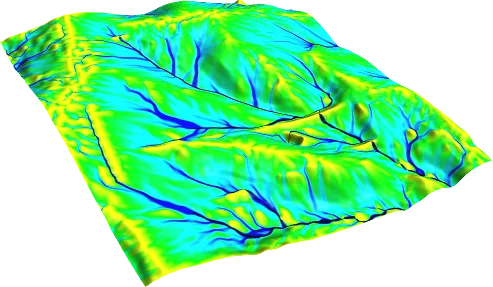
Extreme weather events and sudden floods experienced in recent years reveal the impact of climate change on engineering designs. Traditional hydrological calculations predict the future based on past meteorological data. However, changing climate conditions bring the reliability of these past data into question.
How Should the Q100 Return-Period Discharge Be Interpreted?
The 100-year return-period discharge (Q100) is the discharge with a 1% annual exceedance probability under stated assumptions; it does not mean a flood occurs regularly once every 100 years. Climate change may affect precipitation extremes, but the direction and magnitude of the effect vary by basin, dataset, model, climate scenario, and time horizon.
For this reason, while making large-scale infrastructure projects, industrial facilities, and urban plans:
- Historical observations should be quality-checked and considered together with climate projections appropriate to the project, such as RCP scenarios.
- Sensitivity analyses should be specific to the basin, scenario, and time horizon; Q500 should not automatically replace Q100, and a fixed multiplier such as 15–20% should not be applied to discharge without a project-specific technical basis.
- Nature-based solutions (sponge cities, permeable surfaces) and conventional structural measures should be assessed together based on site suitability and expected performance.
ArchSu provides hydrological-analysis support for examining climate scenarios and basin uncertainty on a project-specific basis.
Get expert support for basin- and scenario-specific climate sensitivity analysis.
Contact Us