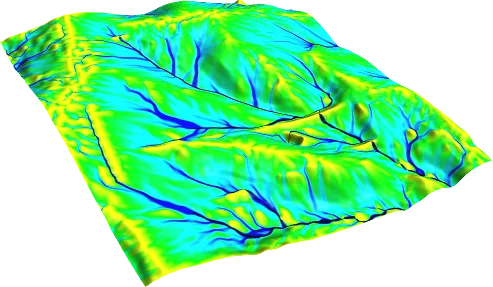
Hydrological study reports examine the rainfall-runoff relationship of a water basin and provide data for designing water structures such as dams, ponds, bridges, or flood-protection facilities. In Turkey, the report scope and technical basis vary with the project type and location and with the project-specific requests of the State Hydraulic Works (DSİ) or another competent authority.
Main Stages of the Report
1. Data Collection and Basin Analysis: The boundaries of the basin where the project area is located are drawn, and physical features such as slope, vegetation, and soil structure are determined.
2. Rainfall and Runoff Analyses: Recurrent flood discharges (Q10, Q50, Q100, Q500) are calculated using extreme rainfall data obtained from the nearest meteorological stations in the region. Appropriate hydrological methods such as Rational, Mockus, or Synthetic Unit Hydrograph are selected.
3. Hydraulic Modeling: How the found discharges will change the water levels (water surface profiles) in the river or stream bed is modeled with software such as HEC-RAS.
4. Evaluation and Reporting: Results are documented with plans and maps using the applicable template and technical basis identified by the competent authority for the project.
Incomplete or inconsistent reports may lead to additional review and revision requests. Our team supports preparation of a technically coherent submission aligned with the project's authority requirements; the review outcome remains with the competent authority.
Get support preparing a hydrological report for your project's specific DSİ or authority requirements.
Contact Us